


I wrote before about Aristotle, usury, money, justice, and the natural order.
At that time, the discussion was more philosophical. I tried to understand why some thinkers criticized usury, why money should not be treated as something that naturally gives birth to more money, and why economic activity should still be connected to real value.
This post is more personal.
It is about work.
Not only work as a way to get salary, but work as something that should have value. Work should produce something useful. Work should help people. Work should make the world a little better, or at least not make people's lives heavier.
That is the question that started to disturb me:
What is the value of my work for society?
My First Company Job
After I graduated from bachelor degree, I got my first company job.
The company was an IT service company. At first, I honestly did not understand enough about the real business flow. The company had many clients from many sectors: government, communication, mining, oil and gas, and other industries.
But I was placed in a big data team.
And the client I worked with was 100% in the finance sector.
At first, I tried to see it simply. I was not a banker. I was not the person who designed the loan product. I was not the person who collected debt. I was not the person who decided the interest rate.
I was just building systems.
I told myself that maybe my work was only about transaction systems, data pipelines, and reports. Maybe it did not directly touch interest, usury, or riba.
That was my argument to stay.
When My Friend Left
One of my best friends in the company decided to leave.
The reason was simple: the client was a conventional bank.
For him, that was already enough reason.
Before leaving, he told me something important:
"You do not need to follow me. This is not a problem if you want to stay in this."
I respected that.
But after he left, I felt lonely.
Some workmates talked about him. Some criticized his decision. Some people did not understand why someone would leave a job for that kind of reason.
That made me more anxious.
If I left for the same reason, would people say the same thing about me? Would they think I was too extreme? Would they think I was wasting opportunity? Would they think I was immature?
So I stayed.
I stayed with my own argument: maybe I was just developing a system, not directly touching riba.
The Second Year Changed My View
In my second year, my view started to change.
I communicated more closely with the director level of the bank. My team helped develop big data reports that were used to generate valid information for management.
From those reports, I could see the business more clearly.
Not only today's profit, but also profit that could be projected many years into the future.
That made me think deeply.
The profit looked very big. But the value was hard to feel.
In many businesses, we can also estimate future profit. For example, if someone owns a building and rents it, they may calculate future rental income. But the owner still carries real risk. The building can be empty. Maintenance can be expensive. The market can change. The asset can lose value.
In finance, especially interest-based lending, I started to feel something different.
The risk often becomes bigger for the customer.
The Business Flow That Disturbed Me
I do not want to pretend that every financial product is exactly the same. There are regulations, contracts, disclosures, different products, and different risk models.
But from what I saw and learned, these patterns disturbed me:
If a customer delays payment, the customer can receive a large late fee. Sometimes the reason for delay is sickness, family emergency, business failure, or something outside their control. But the bill keeps moving.
If a customer pays earlier than the scheduled time, the customer can still receive an early repayment penalty. This was very strange to me. If someone wants to finish the debt faster, why is that punished?
If the customer cannot pay for a long time, the collateral or asset can be taken.
Extra costs can appear around administration, collection, insurance, restructuring, or legal process.
The person who is already weak can become weaker because the system keeps adding pressure.
This is why the question became simple for me.
If the customer is late, the institution can gain more through penalties.
If the customer pays too early, the institution can still protect its expected profit through penalty.
If the customer cannot pay, the customer's asset can be taken.
So where is the shared risk?
Where is the real value?
Where is the justice?
It Is Not Only A Technical Question
At first, I wanted to treat my job as technical.
Database is technical.
Big data is technical.
Reporting is technical.
Dashboard is technical.
But the system we build always belongs to a business flow. A report is not neutral if it helps a harmful system become more efficient. A data pipeline is not neutral if it helps extract more from people who are already under pressure.
That does not mean every person inside the finance industry is bad. I do not believe that. Many people are just working, supporting family, learning, and trying to survive.
But I started to believe that I personally could not stay comfortable if I did not understand the moral shape of the business.
That was the real lesson.
Before choosing a job, we should not only ask:
"How much is the salary?"
We should also ask:
"What does this company actually do to people?"
Riba Is Not Only A Word
In Indonesia, discussion about bank interest, riba, and usury is not a small topic. There are many opinions, many scholars, many arguments, and many personal situations.
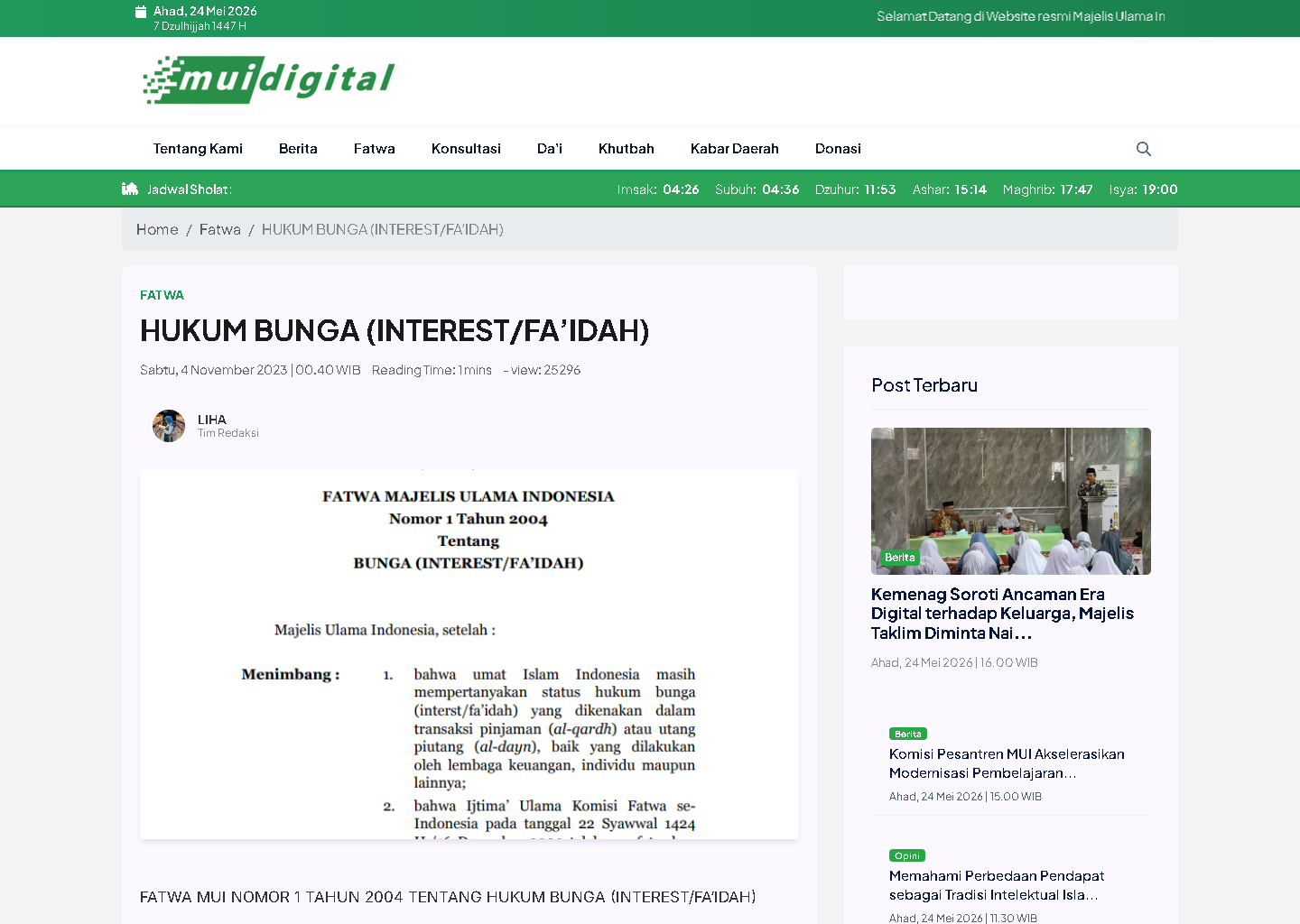
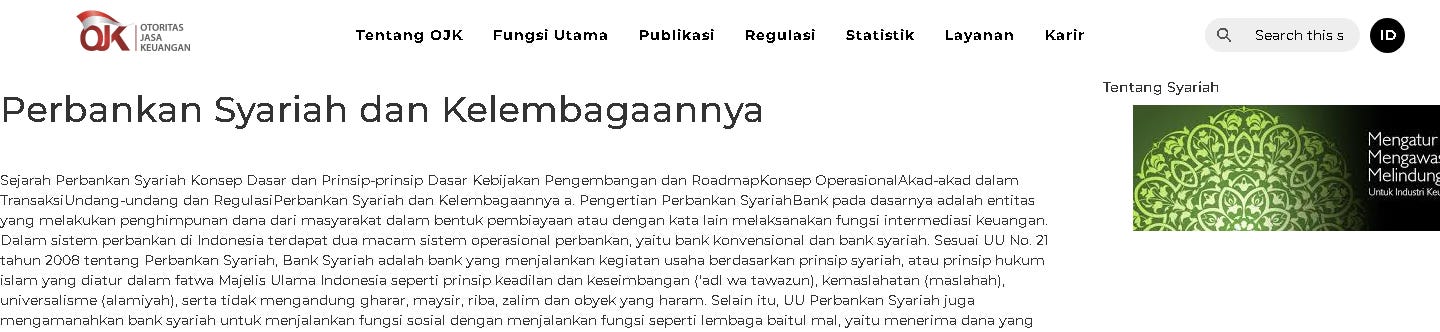
MUI has a fatwa about interest. OJK also explains Islamic banking principles, including the avoidance of riba, gharar, maysir, and other prohibited elements in Islamic finance.
I am not writing this as a scholar.
I am writing this as someone who worked inside the technology layer of a finance-sector client and slowly realized that business flow matters.
For me, riba was no longer only a word in a lecture or article.
It became a real system.
It became a report.
It became projected profit.
It became penalties.
It became customer risk.
It became my own anxiety.
The Strange Dream Of Working In Banks
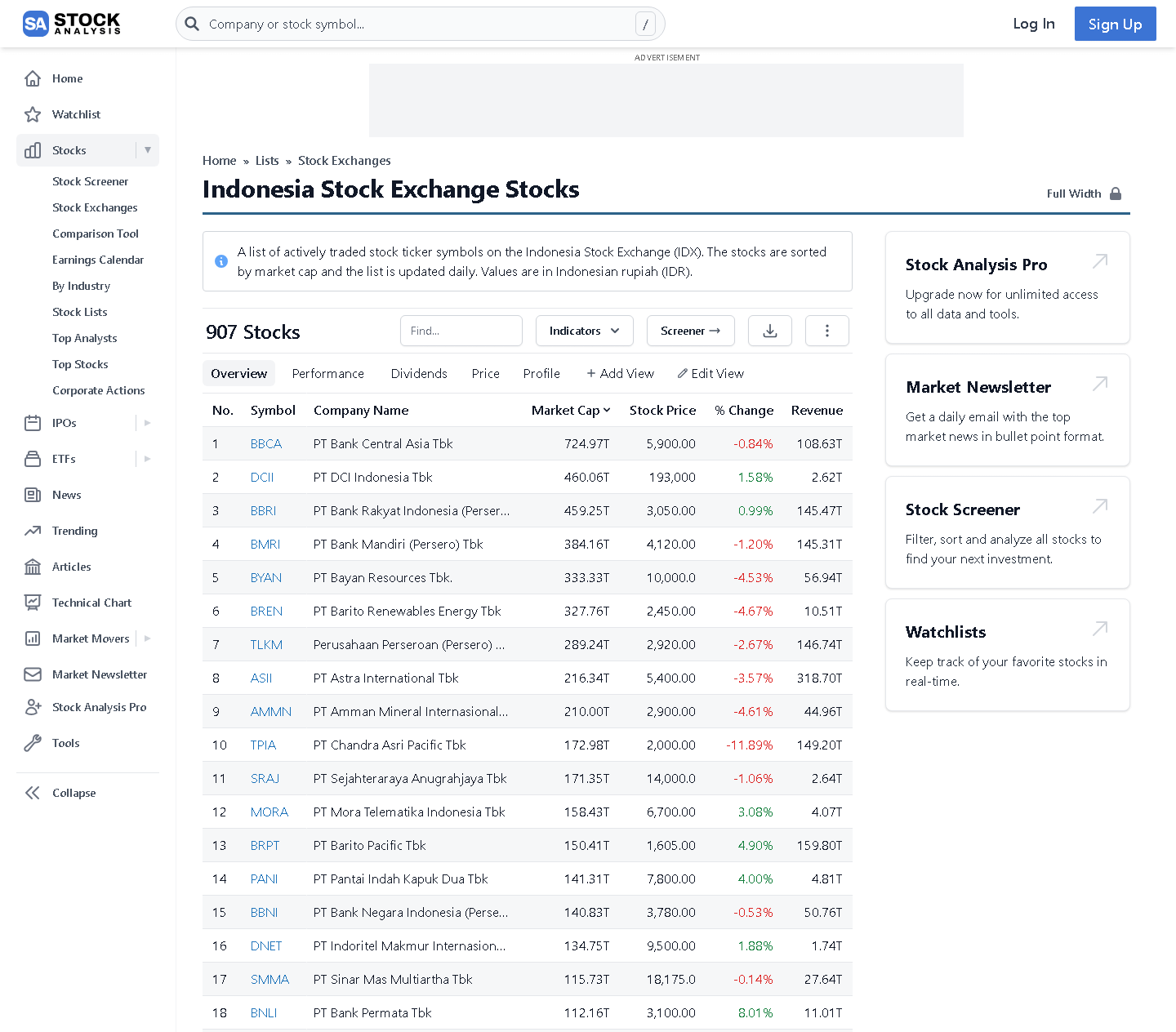
In Indonesia, many of the richest public companies are banks. The exact ranking changes with market prices, but banks such as BCA, BRI, Mandiri, and BNI are often among the biggest names in the market.
Many graduates dream of working in those companies.
I understand why.
The salary can be good. The bonuses can be good. The career path looks stable. The office looks professional. The social status can be high.
But one question stayed with me:
Can I explain, in simple words, what value this company creates for society?
A good answer should be easy to feel.
A farmer grows food.
A teacher helps people learn.
A doctor treats sickness.
A builder creates a house, road, bridge, or building.
A software engineer can build tools that help people work better.
But if a business becomes rich mostly by charging interest, penalties, and fees to people who need money, then I need to ask harder questions.
Maybe the business provides liquidity. Maybe it provides payment infrastructure. Maybe it helps some people buy homes, start businesses, or manage cash flow.
But if the profit depends too much on other people's debt pressure, then I cannot easily call it beautiful.
Why I Decided To Leave
After that realization, my reason became simpler.
It was no longer too complex.
I did not need to win every debate about finance, economics, regulation, or law.
I only needed to answer one personal question:
Can I continue building systems for this sector with a peaceful heart?
My answer became no.
So I decided to leave.
No problem if my life became harder than before.
No problem if I needed to build new connections again.
No problem if I needed to restart from a less comfortable position.
At least I could move toward work that felt more aligned with my purpose and values.
What I Learned Too Late
I feel a little sorry because I was too innocent before.
In school and college, we learn many technical things. We learn how to code, how to analyze data, how to pass exams, how to prepare for interviews.
But many of us do not learn enough about business flow.
We do not ask:
Who pays?
Who carries the risk?
Who becomes richer?
Who becomes weaker?
What happens when the customer fails?
What happens when the system becomes more efficient?
Does efficiency help society, or does it make extraction faster?
These questions should not only appear in the middle of our career. We should learn to ask them earlier.
Work Should Be Useful
I still believe work should be useful.
It does not need to be glamorous.
It does not need to make us famous.
It does not even need to make us rich quickly.
But it should have value.
It should be something we can explain with a clean heart.
It should be something that, when someone asks "what does your work give to society?", we do not need to hide behind complicated words.
Maybe this is idealistic.
Maybe this makes life harder.
But I think a harder life with clearer purpose is better than an easier life with a disturbed heart.
Closing
I am grateful for that experience.
It was not easy, but it taught me something important: before judging a job only from salary, brand, or status, we need to understand the business flow behind it.
If the flow creates value, supports people, and shares risk fairly, maybe that work can be beautiful.
But if the flow becomes rich while other people carry the pain, then we should at least be brave enough to ask whether we still want to be part of it.
I share this because maybe someone else also feels the same confusion.
Maybe someone is working in a place that looks successful from outside but feels empty inside.
Maybe someone is asking whether their work has value.
I do not have a perfect answer for everyone.
But for me, leaving that sector was one step toward work with more purpose.
Alhamdulillah.