

In a world engineered for hyper-stimulation, doing absolutely nothing has become a radical act. Between doom scrolling, notifications, and background music, our brains are constantly flooded with cheap dopamine.
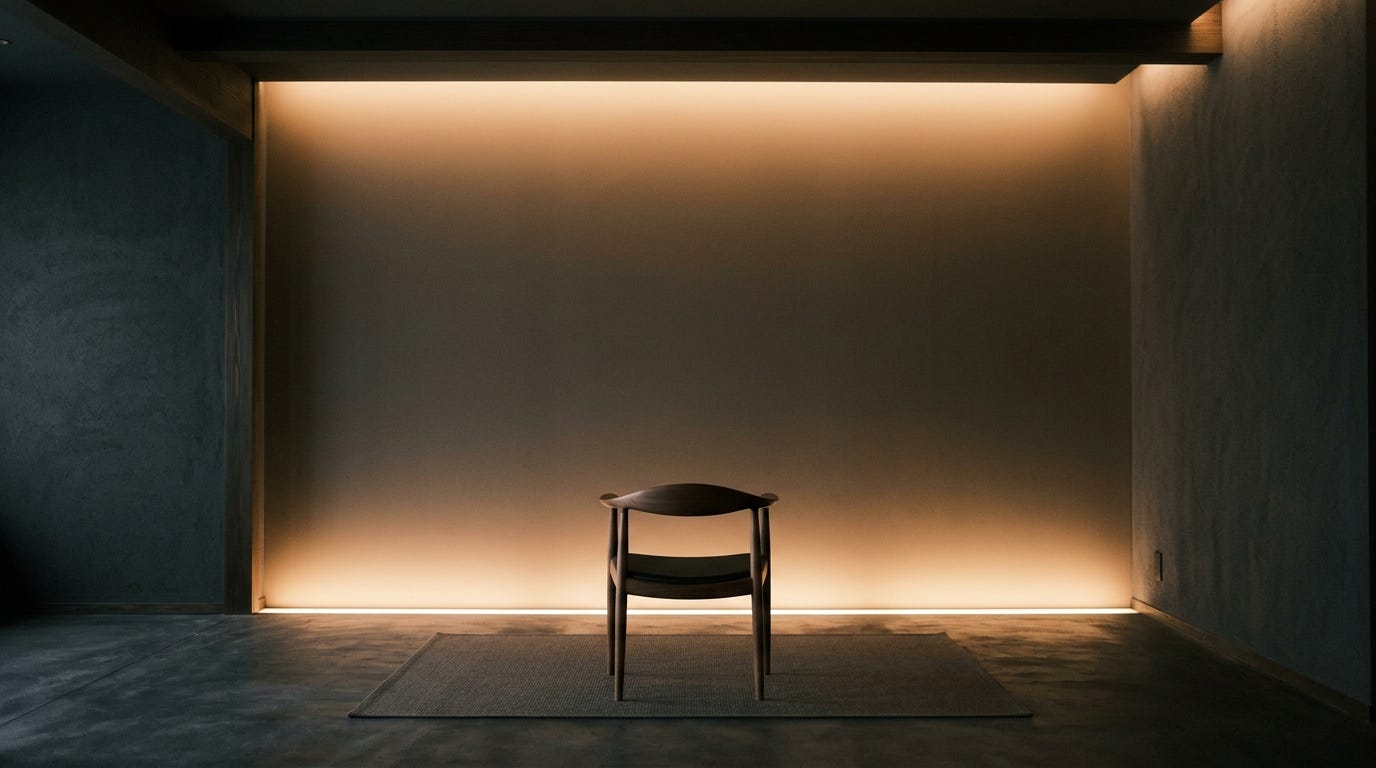
Recently, I began practicing a simple ritual: the 10-minute wall-staring method. Before starting a 3-hour session of deep study or deep work, I sit in a chair and stare at a completely blank wall for exactly ten minutes. No phone, no music, no food - just me and the wall.
This simple practice has transformed my productivity, but I quickly realized it has a strict prerequisite: mental visual clarity. Here is how the method works, why it is deeply connected to strict self-control, and how intentional boredom resets your focus.
The Mirror of the Wall: Connecting to Self-Control
"If you want to destroy any nation without war, make adultery or nudity common in the young generation."
Saladin the Wise
This ancient observation points to a timeless truth: a society's focus and strength are directly tied to its self-control. On an individual level, the same principle applies. If you want to destroy your own focus without effort, flood your mind with hyper-stimulation.
When you stare at a blank wall, there are no external inputs to distract you. You are looking at a blank canvas. Factually, your eyes see nothing, which means the wall becomes a projector for your internal thoughts. It reflects whatever you have been feeding your mind.
If you do not exercise strict self-control (especially regarding highly stimulating content like sexual content, nudity, or doom scrolling), staring at a blank wall becomes significantly harder.
In that blank space, your brain attempts to replace the lack of external visual stimulation with internal imagery. If your mind is cluttered with hyper-sexualized thoughts or the residue of cheap stimulation, those unclean loops will flood your consciousness. You will struggle to sit still, get anxious, and find it extremely difficult to maintain peace. This discipline is found across many spiritual traditions, most strictly in Islamic teachings on guarding one's gaze and thoughts.
To reap the benefits of the wall-staring method, you must first keep your mental canvas clean. Cultivating self-control removes the high-stimulus clutter, allowing the blank space of the wall to remain calm rather than chaotic.
The Friction of Extreme Boredom
Staring at a wall for ten minutes sounds easy until you try it.
Around the three-minute mark, an intense, crushing boredom sets in. Your brain, desperate for a dopamine hit, will start suggesting alternative, "productive" distractions. You will think:
"This is a waste of time. Doing push-ups would be much better than doing nothing!"
"I should quickly tidy up my desk."
"Let me plan my study schedule instead."
The core rule of the method is that you must hold. You must resist even productive urges until the 10-minute timer is completely finished. You have to sit through the friction of doing nothing.
Re-calibration: Deep Work as a Reward
The magic of the wall-staring method lies in the phenomena of measurable, intentional boredom. By forcing your brain to experience absolute inactivity, you lower your dopamine threshold.
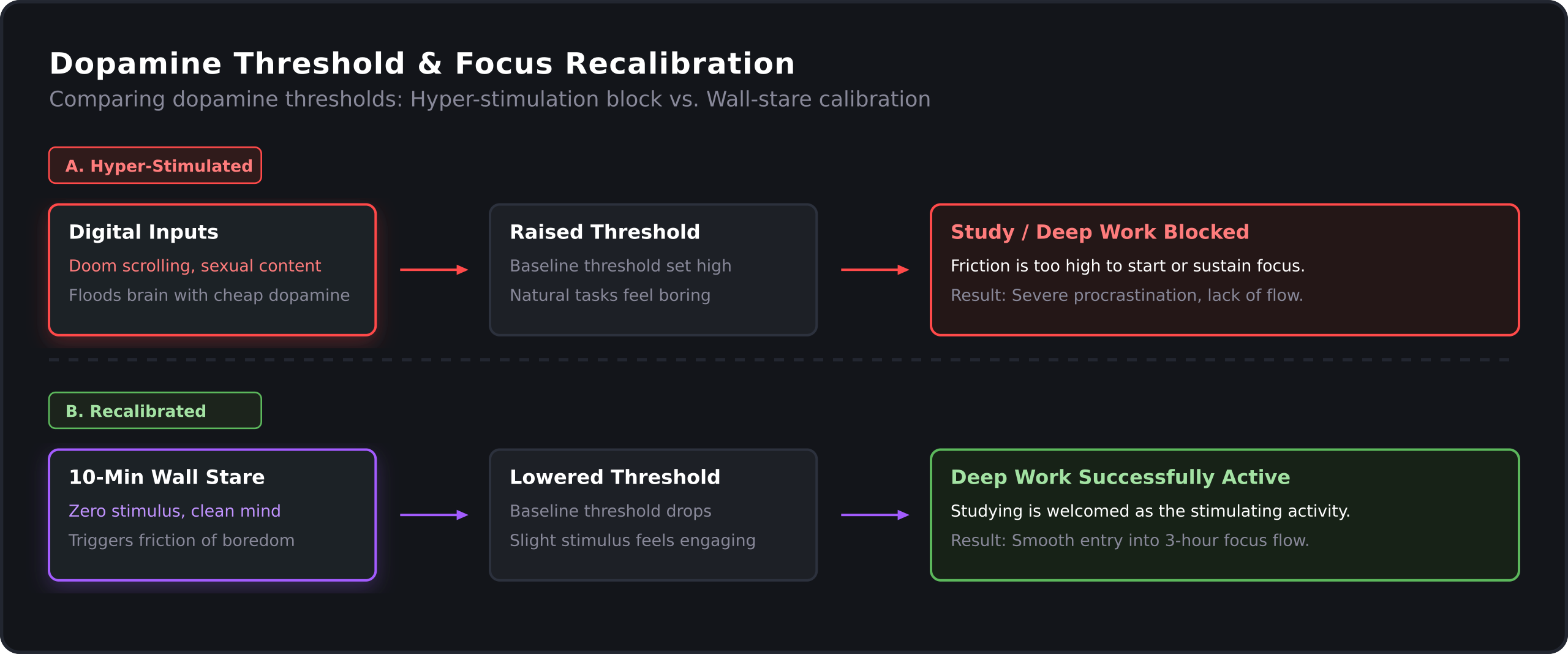
Figure 1: Comparison of dopamine thresholds: over-stimulation blocks cognitive tasks, while wall-staring recalibrates sensitivity.
If you spend ten minutes staring at a blank wall, your baseline adjusts. When the timer finally goes off, starting to read a technical book, writing code, or studying feels like a stimulating escape. Your brain welcomes the work because it is infinitely more engaging than the void of the wall.
By contrast, if you start your study session after doom scrolling or looking at sexual content, your dopamine threshold is raised so high that sitting down to study feels like pulling teeth.
Doing nothing with a clean mind is a powerful tool to reset your baseline, allowing you to transition easily into 3 hours of uninterrupted, deep focus.
Thanks for reading. See you in the next experience.